Whether you’re sixteen or halfway through a degree, it could be that you’re looking for more than a hobby and are ready to grow.
Key Takeaways
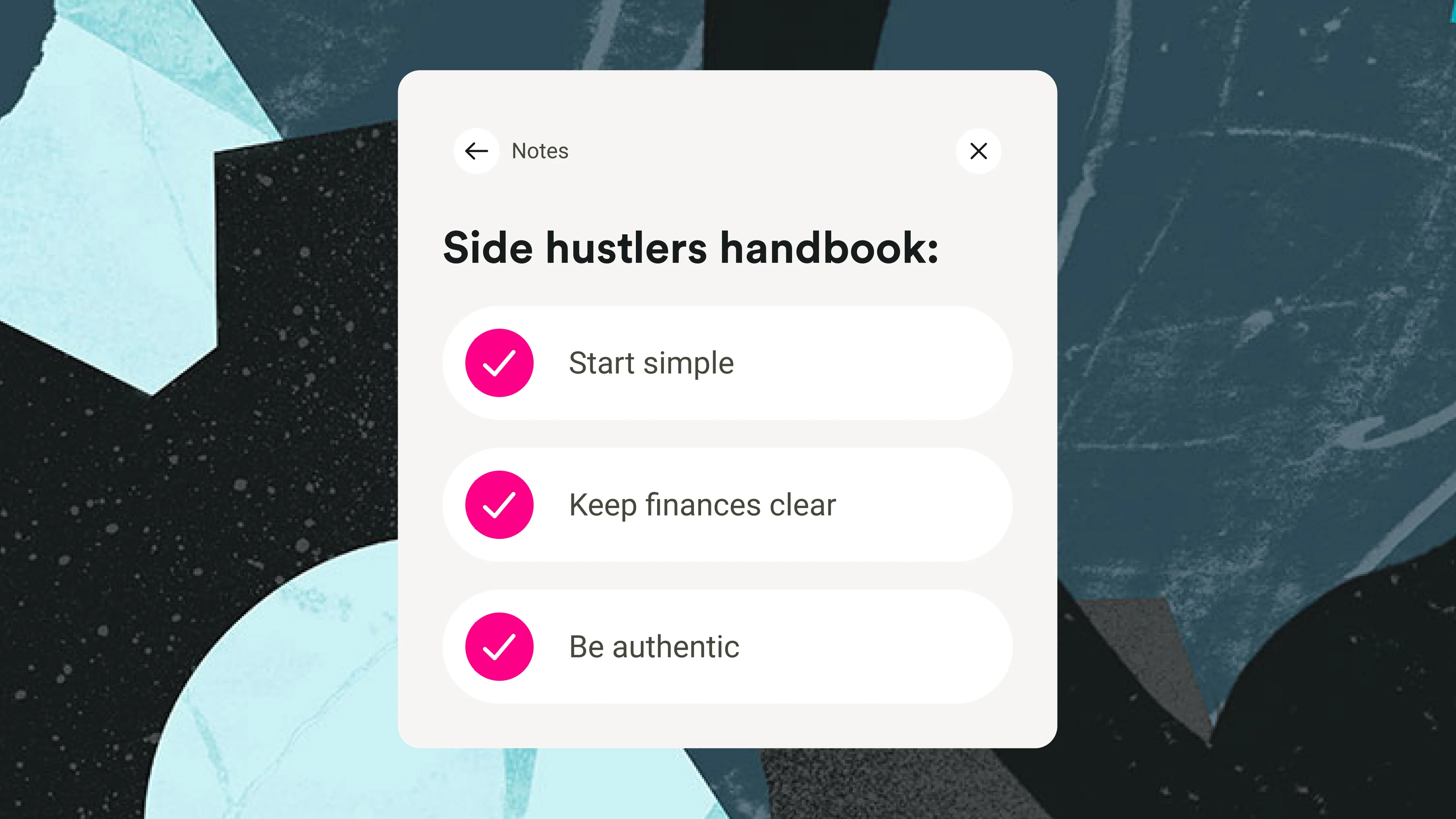
Start simple: Focus on your "why," test your ideas with a small group first and learn from feedback rather than over-planning.
Keep finances clear: Separate your personal and business money from day one and track every pound you earn or spend.
Be authentic: Use social media to share your real progress and build genuine connections rather than just chasing virality.
What might a side hustle look like for you?
A side hustle could be more than pocket money, it can be a business run on your terms. Take a skill you enjoy or a passion you love and see if it could become a rewarding revenue stream.
Real-world inspiration
Here are some ideas for how you could turn a passion into a business:
Digital service provider: Support local businesses or creators with video editing and social media. Creating engaging content is a valuable skill that helps you build a professional portfolio.
The upcycler: Give thrifted finds a second life as custom clothing. It’s a creative and sustainable way to share your personal style with others.
Academic tutor: Share your knowledge by helping students excel in subjects you enjoy. It’s a rewarding way to reinforce your own learning while supporting others.
Event promoter: Help student societies grow by organising and promoting events. This builds excellent communication and project management skills.
Study resource creator: Design and sell well-structured study guides or resources. It’s a fantastic way to turn your effective study habits into a helpful service for your peers.
Finding your thing
Instead of a complex plan, start by exploring your idea. Share your concept with friends or potential customers early on. Start with manageable steps, listen to feedback, and let your community help guide your direction.
Your Quick-Start Plan
You don't need a formal business plan to get started. Just focus on a one-page approach:
What are you offering? (Your product or service)
Who is it for? (Your target customer)
What is your first goal? (e.g., finding your first three clients)
To fund your hustle, focus on 'bootstrapping.' This means keeping your initial costs low by using free tools, leveraging your existing resources, and reinvesting any small profits back into your work rather than seeking external funding.
Setting your goals
Clear goals help you stay motivated. Set positive targets that feel achievable. Whether it’s reaching your first few customers or completing a specific project, celebrate every milestone. Focus on your "why", the passion behind your work, and keep your eyes on the next positive step forward.
From hobby to hustle: Spotting the profit
A successful side hustle happens when your interests align with something others find helpful. Your enthusiasm is the spark, and providing a useful service is what makes it sustainable. Test your idea with a small group to see how you can best meet their needs.
Finding your audience
Focus on connecting with a specific community that appreciates your work. Find where they spend time, understand their interests, and learn how you can best support them. Building a genuine connection with your audience is the key to lasting success.
Social media: Being real, not just viral
Use social media to start meaningful conversations. Share your progress, both the exciting wins and the learning moments. Be yourself and let your unique personality shine through. Authentic brands are the ones that people remember and support. Find out more on how to utilise social media with our simple guide.
The real business essentials
Starting on the right foot makes the whole journey smoother. One of the most helpful things you can do is keep your personal and business money separate from day one. Having a dedicated account not only helps you see exactly how your hustle is growing, but it also makes your accounting much simpler when it comes to tracking your progress.
You don’t need complex software to stay organised. Understanding basic record-keeping is all about finding a system that works for you. A simple spreadsheet is a fantastic way to log your income and expenses as they happen.
It’s also a great idea to check your local tax obligations early on, and you might find the Tax Help for Hustles guide from HMRC in the UK particularly helpful. Getting to grips with these essentials now means you can focus more on the creative side of your business with total peace of mind.
When you’re ready to move beyond a simple spreadsheet, it's worth looking into dedicated accounting software. Under the UK Trading Allowance, gross trading income of £1,000 or less from one or more trades is often tax-free and may not need to be reported to HMRC.
However, there are circumstances where you must register for Self Assessment and declare your income on a tax return, so it's always worth checking the rules. Once you exceed this threshold, software like FreeAgent becomes incredibly useful for tracking sales, logging expenses, and managing digital tax requirements. Plus, Mettle users can access FreeAgent free of charge*.
*To get FreeAgent included, you must make at least one transaction a month from your Mettle account. If you don’t make one transaction a month, or if your Mettle account is closed and you continue to use FreeAgent then the FreeAgent fees will apply. Optional add-ons may be chargeable.
Finally, think about where you work. Finding a distraction-free workspace, even if it's just a specific corner of a room, can really help you get into the "zone." When you have a dedicated place to focus, you’ll find it much easier to turn your ideas into reality and enjoy the process of building something of your own.
Pricing your worth
Value the time and care you put into your work. Price your services fairly based on the positive impact you have. It’s important to respect your own skills from the beginning, which helps your customers value what you offer too.
The hustler’s balance: Protecting your energy
Handling the "no"
While your enthusiasm is the engine, remember that maintaining a steady pace is key. Building something of your own should be a rewarding experience, not a source of burnout. You don’t need to sacrifice your sleep to achieve success. Strive for a healthy balance by giving your studies your full focus when needed, and dedicating quality time to your hustle when the moment is right. Protecting your own energy is just as important as any other business essential.
It is perfectly normal to encounter the occasional "no" as you grow. View these moments as valuable opportunities to polish your concept and improve your pitch. Consider how you might sharpen your message or better connect with a community that truly values your work. Every bit of feedback is a positive step forward on your unique journey.
Your First Steps Checklist
Separate your finances: Open a dedicated business account today to keep your professional and personal spending distinct.
Track every penny: Log every income and expense immediately to maintain a clear picture of your business growth.
Master your taxes: Review the Tax Help for Hustles guide to ensure you stay compliant from the start.
If you’re ready to take your business to the next level, the NatWest Accelerator offers a wealth of support. Explore how you can access expert mentors, participate in networking events, and receive dedicated coaching at our various hubs across the UK to help you kickstart and grow your hustle.