It is simply a tool to build a community of people who love what you do, helping you spend less time chasing leads and more time living.
Whether you’re just starting out or ready to scale, we've pulled together the tools, strategy and roadmap you need to set your business up for success on social media.
Social media by the numbers
Why focus on social media? The answer is simple: it’s where your audience spends their time.
The reach: There are 67.8 million individuals using the internet and 54.8 million social media user identities in the UK. It is the most direct route to your potential customers.
1. Define your why. Set your goals.
While it's natural to look at what others are doing, your strategy works best when it's tailored to you.
Let's look at the facts: 80% of UK small business owners find social media to be an effective channel for finding new leads. The real power lies in the community you build, rather than just the number of followers you have.
To stay focused and avoid burnout, pick one or two of these goals and nail them first:
Brand awareness: Put your name on the map.
Website traffic: Guide people straight to your shop or booking page.
Direct sales: Convert existing engagement into actual revenue.
The audience persona exercise
To help your voice resonate, it can be really useful to picture exactly who you're chatting with. If you could describe your ideal customer in just one sentence, what would you say? Perhaps they're a busy parent, a fellow business owner, or a creative freelancer.
Then, ask yourself: "Where does this person spend their time?" This simple check helps ensure you’re spending your time in the right place.
2. Choose your space. Own it.
You don't have to be everywhere at once. It's often much more rewarding to focus on the one or two places where your customers already love to hang out.
Here’s a quick look at who’s using what:
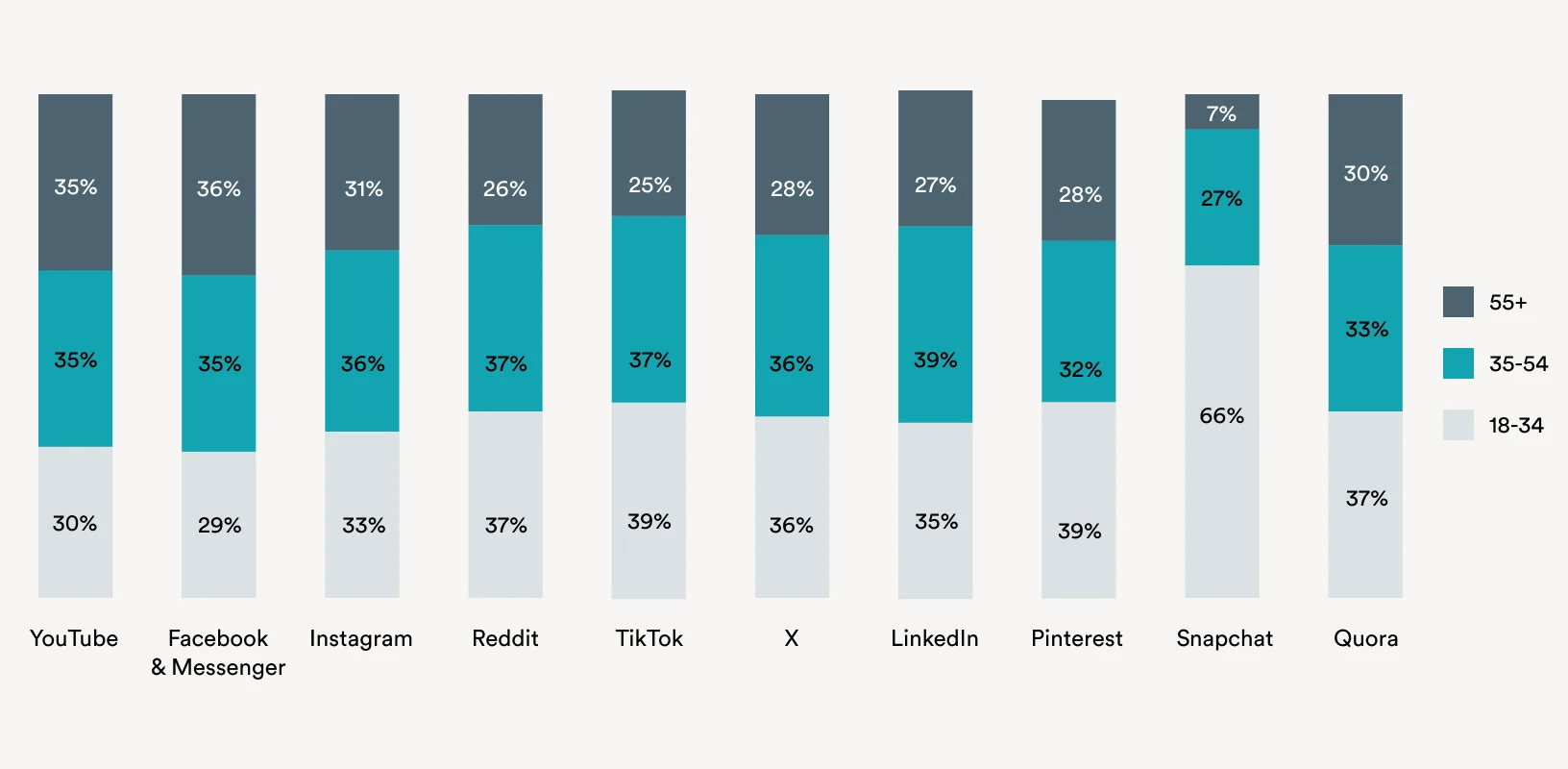
Figure 1: Top ten most used social media channels by age
It's worth noting that for anyone aged 18 to 44, social media has become the go-to space for discovering new products.
Once you’ve identified where your customers spend their time using the chart above, use the table below to decide which platforms align best with your business goals.
Platform | Best for | Why it works |
|---|---|---|
Visual storefront. | Perfect for lifestyle businesses. Mobile-first and easy to use. | |
Broad demographic. | Great for community groups and practical updates. | |
Professional network. | The best place for B2B or services. It builds authority and network. | |
Visual search engine. | Ideal for design, home, or recipes where people plan future purchases. | |
TikTok | Raw entertainment. | Great for reaching new audiences with unpolished, short-form video. |
X (Formerly Twitter) | Real-time chat. | Good for industry discussions and direct engagement |
Skip the overwhelm: Start small. Pick one platform, find your feet there first, and make the whole process manageable.
3. The mix. Organic vs. paid.
Think of your social presence as a two-speed engine:
Organic (The megaphone): This is your conversation. It builds real relationships with the people who already know and love what you do.
Paid (The booster): This is your accelerator. It introduces your brand to targeted groups who haven't found you yet.
The plan: Start organically to build that core community. Once you see your content connecting with people, use paid ads to give your best posts a competitive boost.
Balance your feed: the 60/30/10 rule
Keep your feed balanced, useful, and human with this simple split:
60% Knowledge: Share tips and answer common questions to solve problems for your audience.
30% Connection: People buy from people. Show the person behind the business with day-in-the-life or behind-the-scenes content.
10% Promotion: You’ve built the trust, now make the sell. Share your offers and new launches with confidence.
4. The 'Be Human' approach: Keeping it real.
Social media only works when it feels like a real conversation. Write exactly how you would speak to a friend over coffee.
Ditch the jargon: Speak plainly so everyone feels included.
Stay conversational: A casual, confident tone is much more approachable than corporate language.
Embrace the imperfect: Don't feel pressured to have perfect photos. Your community will likely value your authenticity over professional polish.
5. Get moving: your first 30 days.
Find your rhythm
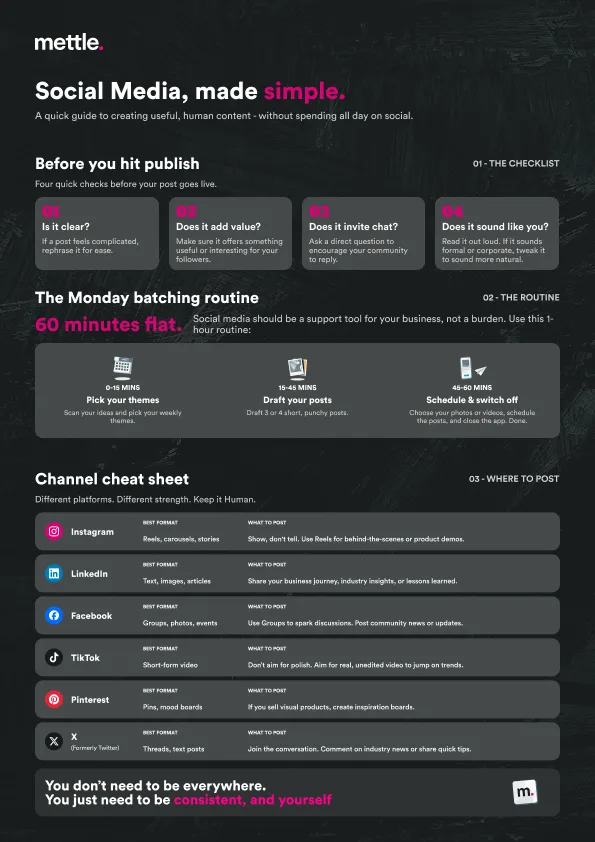
Consistency isn't about posting every single day. In fact, that’s often a recipe for burnout. It’s about finding a rhythm you can stick to over the long term.
Whether you choose two posts a week or three, show up reliably. Your community will appreciate knowing when to hear from you.
We know you're busy running your business, and you shouldn't have to feel like a full-time social media manager too. Batching can be a real life-saver. You might try spending just one hour a week scheduling your posts so you can focus on your work without distraction.
Your 30-day roadmap
Phase 1 (Days 1–10): Set up. Claim your handle, write a clear, helpful bio, and introduce yourself to your network.
Phase 2 (Days 11–20): Experiment. Try different content types like photos versus video to see what gets a reaction.
Phase 3 (Days 21–30): Lock it in. Establish your schedule and build a steady rhythm.
6. Two-way traffic. Keep talking.
Social media isn't a one-way broadcast. Posting is just the beginning - the real magic happens when you chat with your community.
The 10-minute rule
Commit just 10 minutes a day to chatting with people. No overthinking, no looking for perfection. Just show up and be yourself.
Use these three simple conversation starters when replying:
The thanks: When someone comments, reply with a direct "Thanks for sharing!" or "Glad you liked it!"
The question: If you want to keep the chat going, ask a simple question back. (e.g., 'Thanks for the comment! Have you tried it yourself?')
The help: If someone asks a question, answer it directly. Don't worry about being a salesperson, just focus on being the helpful expert they need.
7. Track your progress. Know your numbers.
Once a month, take 10 minutes to see how things are going. Don’t worry about complex data. Instead, focus on these two simple signs of progress:
Engagement: The heartbeat of your social media. When people comment, like, or share, they are connecting with your business. High engagement builds trust and tells the platforms your content is valuable. If the room feels quiet, it's just a friendly sign to test a different mix of content.
Reach: Think of reach as your digital shop window. It’s the number of new people who get the chance to see what you’re all about. If your reach is low, it just means you haven’t popped up in front of the right crowd yet. Tweak your hashtags, try posting at a different time, or create content that is easier to share.
Eye on the competition
Look at others in your field for inspiration. Think of it as joining a wider conversation, rather than just observing others.
Ask yourself:
What tone of voice do they use?
How often do they post?
What gets their followers talking?
Their feed is a free testing ground. If a specific type of post works well for them, see if you can put your own unique, human twist on it.
Keep it simple
You don't need fancy, expensive software to see what’s working. Use the free tools at your fingertips:
Built-in insights: Instagram, Facebook, and LinkedIn have free analytics tabs already set up for you. Spend some time checking which posts got the most interaction.
One central space: Create a simple marketing activity tracker to note down what worked and any new ideas. It’s a low-stress way to track progress over time without complicated spreadsheets.
8. Your toolkit. Less effort, more impact
We've put together a social media check list for small businesses, to save you time and keep things feeling like "you."